
Traumatic Memory and Recovered Memories: When the Media Manufacture Scientific Consensus
Reflections on Memory, False Memories, and the Media Coverage of the Patrick Bruel Case.
🇫🇷 Lire la version française de cet article Article by Jean Touati, Hypnotherapist
Abstract
Drawing on a critical analysis of two French television debate programmes devoted to allegations of sexual violence, this article examines how certain hypotheses concerning traumatic memory, revictimization, and dissociative identity disorder are presented to the general public. It is not concerned with the guilt or innocence of the individuals discussed, nor with the factual merits of the allegations made against them. Rather, its focus is the media treatment of an ongoing scientific controversy.
By comparing these televised narratives with the international scientific literature, the article identifies a number of simplifications, omissions, and conceptual shifts between hypotheses, interpretations, and established scientific knowledge. After reviewing the principal research on autobiographical memory, false memories, and recovered-memory practices, it examines the clinical and ethical implications of suggestibility in psychotherapy.
Finally, it argues that acknowledging the suffering of victims and maintaining scientific rigor are not opposing objectives but complementary ones, and that an open, pluralistic scientific debate remains essential both to accurate public information and to the respectful care of patients.
and some fictions heal,
there are also fictions
that leave lasting wounds. Jean Touati
Why This Article? Two Television Debates, One Common Pattern
"C ce soir" and "C dans l'air" are among the few remaining French television debate programmes that still invite researchers and public intellectuals while leaving genuine room for scientific disagreement. Excellent documentaries certainly exist—notably those broadcast by ARTE (Hitier, 2016)—that explore the neuroscience of memory with remarkable rigor. On live television, however, opportunities for genuine intellectual confrontation have become increasingly rare.
For that reason, I usually watch these programmes with favorable expectations. Perhaps that is precisely why my disappointment proved all the greater.
Despite their different formats, "C ce soir" and "C dans l'air" recently provided two illustrations of the same phenomenon that I have observed for more than twenty years: whenever sexual violence is discussed on television, personal testimonies and emotion take center stage, while scientific controversies concerning memory, cognition, and the reconstructive nature of remembering are almost entirely absent.
The subject itself is unquestionably important. The voices of victims of sexual violence deserve to be heard, and the difficulties of gathering evidence, the slowness of judicial proceedings, and the persistence of impunity are matters of legitimate public concern. No reasonable person could oppose that objective.
Yet once again I witnessed a familiar pattern: deeply moving testimonies describing events said to have occurred thirty or even forty years earlier, overwhelming emotional intensity... and, in striking contrast, the near-total absence of specialists in human memory, cognitive biases, or cognitive neuroscience.
Emotion, I understand it. I work with it every day. But emotion is not evidence. And the sincerity of a testimony, however genuine, cannot by itself establish the validity of the memory mechanism proposed to explain it.
The two television programmes are therefore more than simply the subject of this article. They serve as a starting point for examining broader questions that extend well beyond any particular broadcast: how human memory functions, the continuing controversies surrounding traumatic amnesia and recovered memories, and the ways in which certain scientific hypotheses are presented in the media.
My aim is neither to defend nor to accuse anyone, nor to deny the reality of sexual violence. Rather, after conducting thousands of hypnotherapy sessions over more than two decades, I have come to appreciate just how complex, malleable, and sometimes deeply perplexing human memory can be when we ask it to recount the past.
🎬 ARTE: I Remember, Therefore I Am Mistaken (2016) Click to expand
In 2016, the Franco-German public broadcaster ARTE aired the documentary I Remember, Therefore I Am Mistaken, directed by Raphaël Hitier in co-production with CNRS Images. Over the course of 53 minutes, it presents the current scientific understanding of human memory through the work of several leading international researchers, including Elizabeth Loftus, Daniel Schacter, Susumu Tonegawa, Jan Born, and the French researchers Pascal Roullet, Karim Benchenane, Philippe Birmes, and Romain Bouvet.
The documentary reminds viewers that memory does not function as a faithful recording of past events. Every act of remembering has the potential to modify the memory itself; memories may become distorted, enriched, or, under certain circumstances, develop into false memories. It also explores the implications of these findings for eyewitness testimony and judicial proceedings.
The fact that such a documentary was broadcast on a major public television channel illustrates that these issues do not belong to the realm of fringe controversy. Rather, they constitute a well-established and extensively documented field of research in neuroscience and memory psychology.
🧠 The Causality Trap: When the Brain Demands an Explanation
Our brains dislike uncertainty. They are constantly driven to establish causal relationships: when we experience suffering today—anxiety, depression, emotional distress—we instinctively search for a single, coherent, and meaningful cause in our past to explain it.
Psychoanalysis has played a major role in reinforcing this conception of psychological suffering through the search for the "primal scene" (Freud, 1905) and the idea of repressed memories. These concepts have become so deeply embedded in our culture that many distressed patients arrive in therapy already convinced that recovery depends upon uncovering a forgotten trauma.
This is where the trap closes. Some therapists—whether physicians, psychiatrists, psychologists, or psychoanalysts—embrace this cognitive bias without hesitation. Convinced that every symptom conceals a buried secret, they begin searching for a culprit somewhere in the patient's past.
Many young women whom I see for vaginismus, for example, tell me that physicians or therapists have asked whether they might have experienced childhood sexual abuse, based on the implicit assumption that "if the door has closed, someone must once have tried to force it open."
I usually respond with deliberate seriousness: "If someone suffers from bruxism—a constantly clenched jaw and worn-down teeth—do we ask whether someone once tried to pull the steak out of their mouth?"
A smile is usually enough to reveal the absurdity of the analogy. Yet it is precisely on this fragile conceptual ground that many of the narratives later presented on television are built.
Readers wishing to explore these issues further—including the reconstructive nature of memory and the reasons why the human brain can produce memories that are entirely sincere yet historically inaccurate—may consult the following article: (Touati, 2014) Regression to a Past Life Under Hypnosis: What Is the Reality?
👑 The Power of the Therapist's Words
When facing a physician, psychiatrist, psychologist, or therapist, people in psychological distress naturally place their trust in someone they perceive as competent to understand what they are experiencing. Such trust is essential to any therapeutic process. Yet it also gives the practitioner's words, questions, and hypotheses considerable influence.
These mechanisms of suggestion are by no means unique to hypnosis. They may arise in any therapeutic relationship whenever the patient attributes strong authority to the practitioner. If the latter begins asking leading, persistent, or suggestive questions—"Are you absolutely sure nothing happened during your childhood?", "Think carefully...", "Many victims forget what happened to them."—the patient may gradually begin to reinterpret his or her personal history through that interpretative framework. Motivated by a legitimate desire to understand their suffering, but also by the trust they place in someone they regard as an expert, a simple hypothesis may become a possibility; the possibility may evolve into a conviction; and the conviction may eventually acquire the subjective status of a memory.
There is nothing extraordinary about this process. It reflects the normal functioning of human memory. The work of Elizabeth Loftus (2001, 2005), together with that of many other researchers, has shown that autobiographical memory is reconstructive: every act of remembering reconstructs the past under the influence of our emotions, beliefs, prior knowledge, and information acquired from our environment. Contrary to a widespread misconception, memory does not retrieve the past—it reconstructs it.
Hypnosis is, of course, no exception to this rule. When used in a highly suggestive manner, it may amplify these influences. When practiced in accordance with current scientific knowledge about memory, however, its purpose is not to recover supposedly buried memories.
Over more than twenty years of clinical practice, during which I have conducted several thousand age-regression sessions, I have never witnessed the spontaneous emergence under hypnosis of a supposedly repressed memory, whether involving childhood sexual abuse or any other life event.
This clinical observation is entirely consistent with contemporary scientific knowledge about memory: memory does not function like a computer hard drive containing intact files waiting to be retrieved, nor like a vault in which memories remain frozen for decades until they are finally unlocked.
📺 The Role of the Media: When Emotional Spectacle Replaces Nuance
The media play a major role in shaping public perceptions of sexual violence and traumatic memory. In television debate programmes, emotionally powerful personal testimonies occupy center stage. Scientific controversies and the limitations of current knowledge, by contrast, are much less frequently presented.
Televised testimonies, tears, visible distress, and apparent sincerity create a powerful impression of credibility. Yet research in the psychology of memory has consistently shown that the sincerity of a witness is not, in itself, evidence of the historical accuracy of a remembered event. A person may be entirely sincere and deeply convinced of the reality of an experience while nevertheless reporting a memory that is inaccurate or has been reconstructed.
📡 "C dans l'air" (19 May 2026): From Emotion to the Illusion of Scientific Consensus?
The 19 May 2026 edition of "C dans l'air", devoted to what the French media referred to as the "Patrick Bruel affair," brought together, under the moderation of Caroline Roux, journalists Alice Augustin (Elle), Laurent Valdiguié (Marianne), and Audrey Goutard (France Télévisions), together with retired magistrate Evelyne Sire-Marin.
The programme opens with a presentation of an anonymous testimony published by Mediapart, later revealed to have been written by Flavie Flament. Alice Augustin first summarizes the account, after which Laurent Valdiguié offers a more detailed interpretation. Together, their interventions present the same narrative sequence: an alleged assault in 1991, a prolonged "blackout," and, decades later, a remark reportedly made by Patrick Bruel that is said to have triggered the recovery of the memory. From the outset, this double narration establishes an interpretative framework centred on testimony and recovered memory.
Laurent Valdiguié then develops this interpretation further. Without eliciting any contradictory reaction from the other panelists, he reinforces this narrative framework based on testimony and memory recovery. He emphasizes the "blackout" described by Flavie Flament, notes that she "does not fill in the gaps," and states that, following an encounter with Patrick Bruel, "suddenly that entire past reconstructs itself." He even argues that this testimony is "even more moving than if she were describing a sordid scene." Thus, before any of the subsequent testimonies are presented, the delayed recovery of memory is treated as self-evident, with no reference whatsoever to the scientific debate surrounding the mechanisms and limitations of autobiographical memory.
Following this opening discussion, the programme presents a succession of testimonies from women accusing Patrick Bruel of sexual assault or rape. It begins with Flavie Flament's account before introducing several other women who appear on camera. Alice Augustin then refers to additional complaints filed in 2019 and 2021, all of which were ultimately dismissed.
Only after this lengthy sequence, approximately halfway through the programme, does the production introduce an excerpt from Dr Gilles Lazimi's testimony before the French parliamentary commission of inquiry into sexual violence against children on 2 April 2026. The Dr Gilles Lazimi, a general practitioner, states:
"I cannot see why a child would have any reason to lie, or why a victim would have any reason to lie. Once again, people question whether a victim might be lying, but they never ask whether a perpetrator might be lying. Yet perpetrators lie all the time. That is what troubles me. I have never known a victim to disclose, in a medical consultation, something they had not actually experienced. It already takes enormous trust to speak about such experiences. These things are not invented. You cannot invent having been raped."
The decision to broadcast this excerpt at this particular point in the programme is not insignificant. Following a long succession of highly emotional testimonies, it reinforces the emotional atmosphere established from the outset while simultaneously lending additional authority to the accounts that have just been presented.
The presenter explains that the statement was recorded during a parliamentary hearing the previous month, but does not mention that it came from a National Assembly commission of inquiry devoted specifically to the judicial handling of intrafamilial child sexual abuse and the situation of protective parents (Report No. 3005). Once inserted into a programme devoted to the Patrick Bruel case, the excerpt takes on a different function. Rather than responding to questions from a parliamentary committee, it reinforces the emotional framing of the broadcast.
Moreover, Dr Lazimi's remarks concern sexual violence committed against children, whereas the programme focuses on allegations involving an adult complainant. Statements such as "perpetrators lie all the time," "I have never known a victim...," and "you cannot invent having been raped" are consequently presented as general propositions, without being contextualised or examined in light of the available scientific literature.
Only Evelyne Sire-Marin, the retired magistrate, introduces a degree of nuance by pointing out that false or mistaken allegations do exist, although they remain uncommon, particularly in certain high-conflict family disputes. Her remark, however, does not give rise to any genuine discussion.
Nor does the programme address another issue that has been extensively documented in the scientific literature: unintentional memory errors, suggestibility, and false memories. Although these topics constitute an important part of the scientific debate surrounding autobiographical memory, they are never mentioned.
Long before the current debates surrounding traumatic memory, cinema had already explored these issues. The film Les Risques du métier (The Risks of the Profession, André Cayatte, 1967), adapted from the novel by Simone and Jean Cornec (1962) and itself inspired by real events, stars Jacques Brel as a schoolteacher falsely accused of sexually abusing three of his pupils.
The most mature of the three, Hélène, claims to be involved in a relationship with him, while Catherine and Josette accuse him of kissing and touching them inappropriately. Eventually, all three are forced to confess that they were lying.
In the film's closing confrontation, as the teacher's wife gently backs the most childlike girl, Josette, into a corner—"Did you want something to happen to you too, like it did to Catherine and Hélène?"—Josette candidly confides: "Yes... Nothing ever happens to me."
🎙 "C ce soir" (4 June 2026): Silence in the Face of Scientific Controversy
📚 A Panel Without Genuine Scientific Debate
On 4 June 2026, France 5's "C ce soir", hosted by Karim Rissouli, devoted an entire programme to sexual violence in the wake of the Patrick Bruel affair. Six guests took part in the discussion: television host Flavie Flament; Mediapart journalist Marine Turchi; Professor Coraline Hingray, psychiatrist at Nancy University Hospital and founder of the Maison de la Résilience; François Lavallière, Senior Vice-President of the Rennes Judicial Court; journalist Hélène Devynck; and regular contributor Nathan Devers. For more than an hour, two concepts structured virtually the entire discussion—traumatic dissociation and revictimization—without any participant questioning their scope or interpretation from a scientific perspective.
🎯 Revictimization: What the Studies Actually Show
Professor Coraline Hingray intervenes immediately after Flavie Flament's first testimony. She provides explicit scientific support for the claim that a woman who has been raped remains at increased risk of being assaulted again throughout her life. The figure she cites is both genuine and well documented. A major meta-analysis including 80 studies and 12,252 survivors of childhood sexual abuse (Walker et al., 2019) reported an average lifetime prevalence of revictimization of 47.9%—meaning that nearly one survivor in two would experience further sexual victimization during adulthood.
The authors themselves, however, emphasize several important methodological limitations. The studies included in the meta-analysis do not all employ the same definition of revictimization; the populations studied are highly heterogeneous and are often recruited from clinical settings or among individuals already engaged in treatment, which calls for caution when generalizing these findings to the wider population. Earlier reviews (Roodman & Clum, 2001) reported an even broader range of estimates, from 15% to 79%. More importantly, both Walker and colleagues and the subsequent review by Papalia, Mann, and Ogloff (2021) stress that the mechanisms underlying revictimization remain the subject of substantial scientific debate.
On the programme, however, these methodological nuances disappear. The prevalence figure is presented as a simple fact, while traumatic dissociation is implicitly offered as the sole explanation, as though no meaningful scientific uncertainty remained.
None of these methodological reservations invalidate the findings themselves. They do, however, highlight the importance of scientific rigor when complex empirical evidence is presented on television as if it supported a single, unequivocal conclusion.
François Lavallière then refers to a Swedish study conducted between 2016 and 2018 that contributed to the legislative debate leading Sweden to introduce the offence of negligent sexual assault, penalizing failure to ascertain consent. The study—most likely that of Möller et al. (2017), conducted among victims treated at an emergency clinic in Stockholm—reported that approximately 70% of sexually assaulted women experienced significant tonic immobility during the assault. Lavallière uses this study appropriately to explain why so many victims offer no physical resistance, an issue of particular legal importance in France, where, until 6 November 2025, convictions for rape required proof of violence, coercion, threat, or surprise. He also notes, with commendable methodological caution, that no comparable French data are currently available.
This study documents a well-established neurophysiological phenomenon—tonic immobility, sometimes referred to as the freezing response. It sheds important light on the behaviour of many victims during an assault. However, it does not, by itself, explain the mechanisms underlying revictimization. On that point, the scientific literature remains considerably more cautious, and several competing hypotheses continue to be discussed.
🔍 Dissociative Memory and Dissociative Identity Disorder (DID): The Illusion of Scientific Consensus
It is at this point, in my view, that the programme takes a further step. Although the mechanisms underlying delayed disclosure remain actively debated in the scientific literature, one particular interpretation is presented as though it were self-evident: the hypothesis of dissociative memory. According to this model, a traumatic event may remain inaccessible to conscious awareness for many years before gradually re-emerging in the form of fragmented memories, thereby explaining why some victims disclose abuse only decades later.
Professor Coraline Hingray describes this mechanism without presenting it as a debated hypothesis. She explains that a traumatic memory may remain "locked away in a chest," inaccessible for years, before returning in fragments, disappearing again, and progressively becoming more complete. According to this model, dissociative memory explains why a victim may remain silent for years, provide an incomplete or non-linear account, or even doubt the reality of what they themselves experienced.
What is particularly noteworthy, however, is the response of Judge François Lavallière. Rather than questioning this hypothesis, he immediately adopts it as the interpretative framework. He argues that judges should receive more extensive training in "the mechanisms of dissociation," that such knowledge is gradually entering the judicial system, and that delayed disclosure, fragmented narratives, or evolving accounts may themselves constitute indicators of trauma. The discussion therefore shifts away from the scientific validity of the model itself and moves directly to the question of how it should be incorporated into judicial practice.
Yet his role might equally have prompted him to recall another reality, one with which the justice system is also familiar: false testimony, memory errors, sincere but inaccurate recollections, external influences, and, more broadly, the inherent difficulties involved in assessing events alleged to have occurred many years earlier. None of these issues is raised. As a result, the panel loses what might have been the only opportunity for someone from within the judicial system to introduce a genuine counterpoint concerning the reliability of memory and the ongoing scientific debates surrounding these questions.
This presentation, however, is far from reflecting the current state of scientific knowledge. It is first necessary to distinguish between several phenomena that are often conflated. That extreme fear may trigger an immediate state of tonic immobility or dissociation at the time of a traumatic event is now well documented. The English term freezing, appropriately used by Professor Hingray, describes this well-established phenomenon: when confronted with an overwhelming threat, some victims become temporarily unable to move, speak, or react.
By contrast, the hypothesis that a traumatic event may remain entirely inaccessible to conscious awareness for twenty or forty years before re-emerging as an accurate memory remains the subject of substantial scientific debate. The mechanisms proposed to account for such delayed recoveries, together with their relationship to dissociative disorders and, in some cases, Dissociative Identity Disorder (DID), continue to be actively discussed in the scientific literature. None of these controversies is mentioned during the programme. Instead, viewers are presented with a contested hypothesis as though it represented broadly established scientific knowledge.
This distinction closely reflects my own clinical observations. Many patients who have experienced sexual violence describe, under hypnosis, an intense state of tonic immobility—a feeling of being unable to move, cry out, or defend themselves. Such experiences may remain profoundly painful for many years. Yet they generally remain part of autobiographical memory, even when patients make every effort not to think about them.
By contrast, over more than twenty years of clinical practice, I have never encountered a patient who "recovered" under hypnosis a memory of childhood sexual abuse of which they had previously been entirely unaware. The only exception has involved individuals who had already reported such memories following an earlier course of psychotherapy. Interestingly, what emerges spontaneously during hypnosis is not always the traumatic event itself. Sometimes it is an apparently ordinary childhood scene that, viewed through the eyes of the adult patient, takes on a very different meaning.
These clinical observations obviously do not constitute scientific proof. They do, however, explain why I draw a clear distinction between the re-experiencing of a memory that has always remained accessible, however painful, and the hypothesis that entirely inaccessible memories may be faithfully recovered decades later. This distinction, although central to the scientific literature, disappears almost entirely from the television programme.
🎥 When Television Creates a Cascade of Certainty: An Analysis of Audiovisual Staging
The most significant shift does not lie in any confusion between the two studies cited by Professor Hingray. To the programme's credit, the two studies remain clearly distinguished throughout the discussion. The shift lies instead in the way they are presented as converging toward a single clinical interpretation that is implicitly treated as established fact, without any researcher specializing in reconstructive memory, suggestibility, or cognitive biases being invited to discuss its limitations or alternative interpretations.
This absence of scientific debate is reinforced by a specifically televisual mechanism. On several occasions, the camera lingers in close-up on Flavie Flament and Marine Turchi nodding while Professor Hingray is speaking. Of course, these images tell us nothing about what either woman actually thinks, nor even whether their gestures of agreement relate to the particular statement being made at that moment. Nevertheless, they produce a well-known effect of non-verbal communication: for viewers, the nod becomes a visible sign of endorsement. The clinical hypothesis consequently ceases to appear as one interpretation among others and instead takes on the appearance of shared knowledge. Television is no longer merely conveying a discourse; it symbolically validates it by allowing viewers not only to hear an apparent consensus but also to see it. Although this technique proves nothing scientifically, it powerfully contributes to creating a level of certainty that extends well beyond what the current state of scientific knowledge justifies.
The same mechanism can be observed in the interview with Marine Turchi. The narrative is constructed through a highly effective escalation of dramatic tension: eight years of investigation, the silence of the French media, the first testimonies, Flavie Flament's decision to speak publicly, the opening of a judicial investigation, and finally the arrival of additional testimonies. The presenter himself contributes to this narrative crescendo by referring to "tons of phone calls" from abroad. Marine Turchi immediately adopts the same register, speaking of calls arriving "en masse" and of "massive" numbers of testimonies before concluding: "I think we are only at the beginning of this case. It's a case with many layers, one that we'll be talking about for a long time."
This choice of language is not insignificant. It gradually creates the impression that an irresistible process of confirmation is unfolding before the viewer. Each new testimony appears to reinforce those that preceded it: more testimonies generate greater credibility, which in turn encourages still more testimonies. This dynamic closely resembles what economists and social psychologists describe as an information cascade: a process in which each new public statement is spontaneously interpreted as confirming the previous ones, creating a cumulative impression of credibility that may exceed the evidential value of any individual testimony considered on its own (Bikhchandani, Hirshleifer & Welch, 1992).¹ Availability cascades and the principle of social proof may further reinforce this phenomenon (see the box below).
📚 Why Does the Accumulation of Testimonies Create Such a Powerful Sense of Credibility?Click to expand
The impression that "the more testimonies there are, the more credible they become" reflects several well-established mechanisms in social psychology, behavioral economics, and information science.
1. Information Cascades
In their seminal paper, A Theory of Fads, Fashion, Custom, and Cultural Change as Informational Cascades (1992), economists Sushil Bikhchandani, David Hirshleifer, and Ivo Welch describe a process in which each successive individual comes to regard the decisions of those who came before as information in their own right. As a result, behavior becomes self-reinforcing: people infer that if many others are reaching the same conclusion, they probably possess information that they themselves do not.
In the context of intense media coverage, each new testimony may therefore be spontaneously interpreted as confirming the previous ones, even though every testimony should be evaluated independently on the basis of its own evidential merits.
2. Availability Cascades
Several years later, Timur Kuran and Cass Sunstein (1999) described a closely related phenomenon known as the availability cascade. The more frequently an event is discussed in the media, the more cognitively available it becomes to the public. This increased availability creates the impression that the phenomenon is more common, more certain, or more firmly established than the available evidence actually warrants.
Consequently, when a television programme accumulates testimonies, news reports, media reactions, and additional accounts, it may generate an increasing sense of confirmation, even though each new element does not necessarily provide additional evidence.
3. Social Proof
Social psychologist Robert Cialdini has shown that, when faced with uncertainty, people naturally look to the behavior and opinions of others as cues to what is true or appropriate. This principle, known as social proof, is one of the central mechanisms of social influence described in his influential book Influence.
On television, this effect is amplified when several participants appear to converge on the same interpretation, when journalists visibly nod in agreement, or when production choices—close-up shots, editing, music, or pacing—create the impression that a consensus already exists.
What This Does Not Mean
None of these mechanisms implies that testimonies are false or that they result from manipulation. Rather, they demonstrate how the accumulation of accounts, their extensive media coverage, and the way they are presented can create a powerful sense of certainty that exceeds the evidential value of each testimony considered individually.
In other words, extensive media coverage may simultaneously encourage genuine victims to come forward while also creating a cumulative cognitive effect of confirmation among the public. This is precisely why each testimony must be assessed on its own merits and why scientific discussion benefits from incorporating research on reconstructive memory, suggestibility, and cognitive biases.
References
- Bikhchandani, S., Hirshleifer, D., & Welch, I. (1992). A Theory of Fads, Fashion, Custom, and Cultural Change as Informational Cascades. Journal of Political Economy, 100(5), 992-1026.
- Kuran, T., & Sunstein, C. R. (1999). Availability Cascades and Risk Regulation. Stanford Law Review, 51(4), 683-768.
- Cialdini, R. B. (2021). Influence: The Psychology of Persuasion. Harper Business (revised edition).
It is nevertheless essential to distinguish between two very different phenomena. That a highly publicized case leads to an increase in the number of testimonies is entirely to be expected. This may reflect a genuine willingness among victims to come forward. It may also result from well-documented processes of identification, reinterpretation of past experiences, social influence, or memory reconstruction. An increase in the number of testimonies does not, in itself, validate those that came before. Yet the programme's narrative structure tends to present this succession as a cumulative demonstration.
In judicial proceedings, however, each testimony must be evaluated on its own merits and in light of the evidence specific to that individual case. The accumulation of testimonies may legitimately prompt investigators to look for possible convergences or to open further inquiries. It does not, however, constitute evidence of the truthfulness of the allegations simply by virtue of their number. It is precisely this distinction that the programme's narrative reasoning tends to blur.
The production further reinforces this narrative through a particularly striking visual device, subtle enough to pass largely unnoticed at the conscious level. Between 11:34 and 11:38, while Marine Turchi recounts the testimony of "Anastasia," who alleged that she had been raped at Patrick Bruel's home in 2019 and believed that she had been drugged, Patrick Bruel's face appears as a large translucent superimposed image occupying nearly half of the right-hand side of the screen for approximately three and a half seconds. This is not presented as a documentary photograph but as an oversized, almost disembodied image suspended over the discussion. His dark sunglasses conceal his eyes, while his face, detached from any contextual setting, quite literally dominates the television set on which the discussion continues.
Without introducing a single additional factual element, this visual composition simultaneously associates the allegation being described with the face of the accused. The viewer no longer receives information alone but is confronted with an audiovisual construction in which editing itself participates in the production of meaning. It is noteworthy that, among the 857 comments I analyzed beneath the YouTube replay of the programme (Touati, 2026)—Read Sociological Analysis of the C ce soir Programme on the Patrick Bruel Affair—not a single commenter mentioned this editorial choice. This does not, of course, demonstrate that it produced any specific effect on viewers. It does, however, illustrate how certain production choices may shape perception without themselves becoming the object of conscious attention.
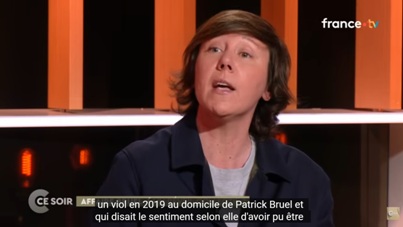
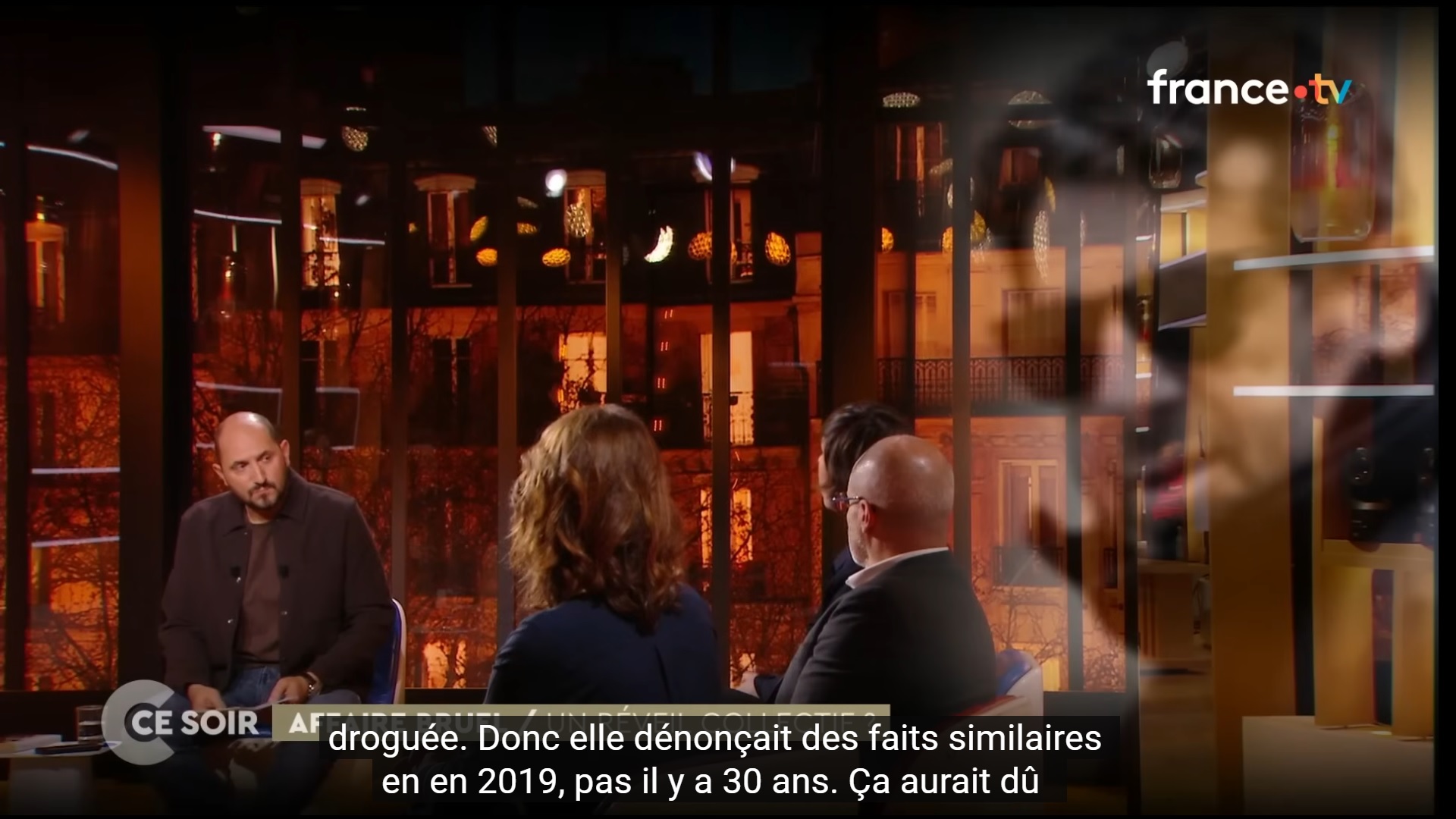
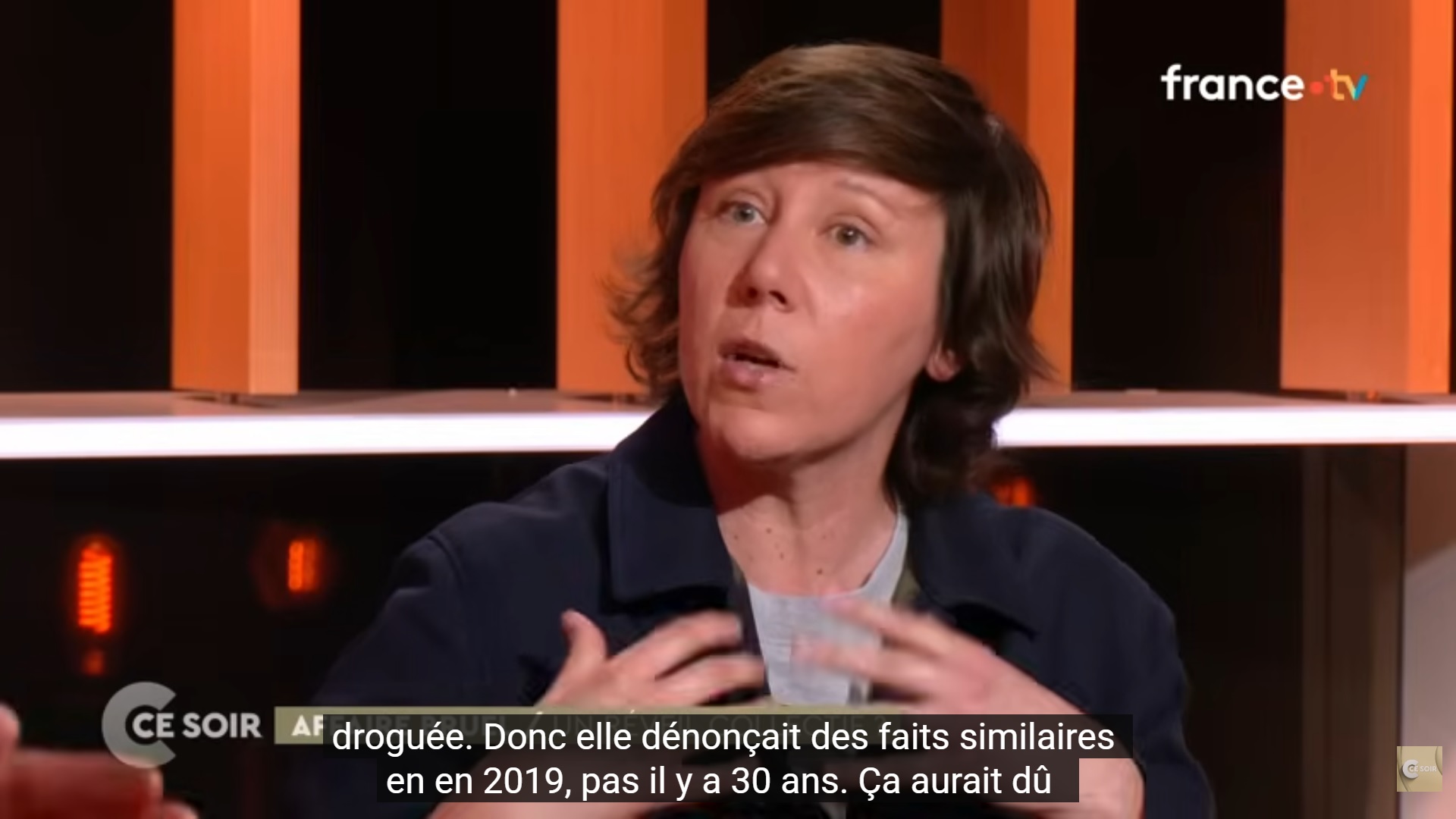
Original broadcast: The sequence discussed here begins at 11:34 — Patrick Bruel Superimposed Image Sequence
The same shift continues during the discussion with Marine Turchi. After referring to the testimonies collected by Mediapart, she explains that some women had allegedly been warned about Patrick Bruel, that several news organizations had reportedly taken precautions by avoiding assigning female journalists to cover him, and questions whether employers may have failed in their duty to protect their staff. She then notes that Patrick Bruel continued to perform with Les Enfoirés, to appear on television, to act in films, and to pursue his career without interruption.
At this point, the discussion gradually shifts beyond the allegations themselves. The implicit question becomes not simply whether the alleged events occurred, but whether Patrick Bruel should already have been excluded from public and artistic life. If such precautions were supposedly being taken behind the scenes, should he also have ceased to be invited onto television programmes?
Yet, at the time of the broadcast, Patrick Bruel had not been convicted of any criminal offence. The complaints filed in 2019 by two massage therapists had been dismissed, and the new judicial investigation had only recently been opened. Thus, without ever explicitly calling for his exclusion, the discussion gradually moves from the principle of the presumption of innocence toward the suggestion that a person under investigation may already be considered unfit to remain in public life.
Television therefore does more than simply report events. Through its choice of participants, vocabulary, editing, imagery, and the absence of scientific debate, it progressively constructs an impression of coherence and certainty. The viewer is no longer merely watching a discussion but is drawn into a narrative in which each sequence appears to confirm the previous one, ultimately creating the impression that the conclusion is self-evident—well beyond what the current state of scientific knowledge allows us to conclude.
💬 The Paradox of the Reference Testimony
On this panel, Flavie Flament occupies a distinctive—and openly acknowledged—position. She has publicly explained that one of the reasons she filed a complaint against Patrick Bruel was to encourage other women to come forward and file complaints themselves, a form of public advocacy that she explicitly embraces.
Yet her contribution to this particular programme reveals a tension that deserves closer examination. Flament describes, with striking emotional intensity and vivid sensory detail, what a woman experiences during a rape, evoking scenes of extreme physical and psychological violence. Professor Hingray echoes this description in remarkably similar language, speaking of burning pain, open wounds, and inner chaos.
However, when discussing the events she attributes to photographer David Hamilton, Flavie Flament has repeatedly stated in numerous media interviews that she had no conscious memory of them for approximately twenty years. According to her own account, "the memory returned" during a medical consultation while she was leafing through childhood photo albums in an attempt to recover early memories, even though, at first, nothing in particular emerged. She recounts the moment as follows:
"At one point, I was about to close the album, saying to myself: 'That's it, there's nothing there, nothing at all. Everyone can relax. End of the story.' Then a photograph slipped out of the album and fell onto the floor. I bent down to pick it up... It was a photograph taken by David Hamilton... And then something... I don't know... came over me. Something I could no longer escape from. I looked at my doctor, holding the photograph in my hand, and I heard myself saying these words: 'He raped me.' Then I repeated them: 'He raped me.' I held on to my doctor's gaze, and suddenly the tears came."
The account that Flavie Flament now gives of how these memories emerged, in the podcast Dans les yeux d'Olivier (2024), is particularly illuminating from the perspective of memory science. It deserves closer examination.
🔍 Flavie Flament's Full Account: What It Reveals About Memory Click to expand
From "Flashes" to the Reconstruction of a Narrative
When Flavie Flament describes how the memories of the rapes she attributes to David Hamilton came back to her, she does not portray the sudden recovery of a forgotten scene (despite the interviewer's introduction, which states that "everything came back overnight"). Instead, her account describes a process unfolding over several years, beginning with a profound and unexplained psychological distress and culminating in the gradual reconstruction of an autobiographical narrative.
Long before any memory emerged, she describes a persistent suffering dating back to childhood for which she could find no explanation:
"I had lived, since childhood, with a kind of underlying state of suffering." "I was never truly happy." She even adds:"When I was a little girl, I believed that children were born to suffer in place of their parents."
At the age of thirty-five, the death of her grandfather triggered a severe depressive episode. It was in this context that what she would later call her first "flashes" began to appear.
"It took the form of a very deep depression... At that moment I began experiencing what are called the first flashes."
She then describes particularly vivid sensations which, at the time, carried no obvious meaning:
"I see the image of a white wall and a blue sky..."
"I see something green... like a piece of fabric... with a horrible smell of dampness..."
"These images are accompanied by physical sensations, emotions, sometimes smells, sometimes tastes..."
These experiences terrified her:
"I thought: I'm going crazy."
"I'm going to die."
It was this overwhelming anxiety that led her to consult a psychiatrist. At this stage, she did not believe she had been the victim of sexual assault; she was simply trying to understand experiences that seemed incomprehensible to her.
Later, during one of their consultations, her psychiatrist suggested that they look through her childhood family photo albums.
Flavie Flament recalls:
"I look through the albums... The photographs are beautiful, the light is wonderful, the sun is shining, I'm laughing in my father's arms... Yet I hear myself dismissing the images. I feel a kind of... (the interviewer suggests: 'rejection')... rejection. I say: 'Well, what do you expect me to tell you? There's nothing extraordinary here. It was an ordinary, happy childhood.' And then I start making up my own little movie. There's nothing to say. It's everyone's childhood. Then I pick up the second album and continue this exercise... this little cinematic exercise."
This wording is particularly revealing. She does not say that the photographs immediately brought back a forgotten memory. On the contrary, she explicitly describes constructing a narrative around the images: "I started making up my own little movie," "I continued this cinematic exercise."
The situation she describes—examining childhood photographs during psychotherapy—is reminiscent of the experimental paradigms that led psychologist Elizabeth Loftus to investigate the influence of photographs on the reconstruction of autobiographical memories (Touati, 2014, section The Search for the "Primal Scene": The Illusion of Mechanistic Therapy). Her work demonstrated that photographs do not provide direct access to the past; rather, they serve as cues from which the brain progressively reconstructs a narrative.
The story then reaches a decisive turning point.
"And then fate cornered me... I was caught in my own game. I was about to close the album, saying: 'That's it. There's nothing there. We've all seen enough. End of story.' Then a photograph slipped out of the album... onto the floor. I bent down to pick it up... It was a photograph taken by David Hamilton... (the interviewer says: 'So it was that photograph that fell?') 'Yes, exactly.' Then something... I don't know... overwhelmed me... A truth I could no longer escape. I looked at my doctor, holding the photograph in my hand... and I heard myself saying these words: 'He raped me.' Then I repeated them: 'He raped me.' I held onto his gaze... and suddenly the tears came."
She immediately adds:
"I had never forgotten that I had posed for photographs with David Hamilton."
This sequence is particularly noteworthy. The conviction appears suddenly, before any detailed recollection of the assault itself is described.
Only afterwards does Flavie Flament assign meaning to the sensory fragments that had haunted her for years.
"For me, traumatic amnesia is like a box buried deep within my soul. Because of the traumatic event that was my grandfather's death, that box opened slightly, and little bubbles started coming out. That's when I understood that the image of the white wall and the blue sky was the moment when I was lying on David Hamilton's balcony."
"The image of the green fabric, the smell of dampness... That was afterwards, in the bathroom, when he handed me that damp, disgusting towel that smelled awful and said: 'Go on, dry yourself. Your mother will be here soon.' And that's when the amnesia set in."
She immediately adds:
"But everything I'm telling you today is the result of years of reflection and analysis to reconstruct the story of a tragedy. At the beginning, it came in fragments... like a badly edited film."
The word "reconstruct" deserves particular attention. Flavie Flament herself describes a process of reconstruction carried out over many years from fragments, images, bodily sensations, and interpretations.
In other words, when these "flashes" first appeared, they were not experienced as identifiable memories. It was only later that they came to be interpreted as fragments of a single event.
She herself describes this process of reconstruction:
"The bubbles don't come back in chronological order... They can't come back in order because everything is fragmented. It's like a bomb exploding—it shatters everything. Bang! It flies everywhere. Everything is blown apart."
None of this is intended to question the sincerity of her testimony. The suffering she describes appears entirely genuine. What her account illustrates, however, is a fundamental distinction in memory research: a deeply held conviction and a richly reconstructed autobiographical narrative are not, by themselves, sufficient to establish the historical accuracy of the remembered events.
With regard to the events she attributes to Patrick Bruel, she invokes a different form of amnesia: drug-facilitated incapacitation, which she says left her entirely unconscious of what was happening at the time.
This raises an important question: how can one later describe an experience with such vivid sensory detail while simultaneously maintaining that no direct memory of the event was retained? Two interpretations are possible, and it is important to distinguish between them without attempting to decide which is correct.
The first is consistent with the experimental paradigm developed by Elizabeth Loftus concerning the reconstruction of false memories from old photographs. Under this interpretation, the photograph itself is not what reveals the memory. Rather, it is the process of actively searching for a forgotten memory within a therapeutic context in which the possibility of a hidden trauma is already regarded as plausible.
The second interpretation, advocated by proponents of dissociative amnesia, holds that the repressed memory genuinely resurfaced in response to a triggering event.
Research on psychological trauma, however, generally describes a clinical picture quite different from that commonly portrayed in narratives of "recovered memories." Individuals suffering from post-traumatic stress disorder typically report intrusive memories, flashbacks, nightmares, or sensory fragments that impose themselves despite repeated efforts to avoid them. These symptoms usually appear relatively soon after the traumatic event, although they may persist or fluctuate over many years. The scenario of a memory remaining entirely absent for twenty, thirty, or forty years before suddenly returning to consciousness with full emotional conviction is not the clinical presentation most commonly observed.
Neither of these interpretations is ruled out by the facts themselves. The point, however, is that this question has never been raised either on the television programmes examined here or in the mainstream media coverage that has accompanied Flavie Flament's account over the years. It was, however, raised elsewhere as early as 2016–2017 by a small number of dissenting voices that remained largely marginal to the public debate. The psychosociologist Brigitte Axelrad, a specialist in false memories, argued that the media coverage promoted a theory of traumatic amnesia that has never been accepted by the scientific community as a whole. Likewise, several analytical publications pointed out that psychiatrist Muriel Salmona was the first to provide a scientific endorsement of Flament's account by linking it to the theories of Linda Meyer Williams (1994) and Cathy Widom (1997) concerning amnesia for childhood sexual abuse—interpretations that themselves remain the subject of scientific debate.
📖 What Do the Studies by Linda Meyer Williams and Cathy Widom Actually Show?Click to expand
The studies by Linda Meyer Williams (1994) and Cathy Widom are frequently cited as empirical evidence supporting the concept of traumatic amnesia. A careful reading of these studies, however, together with the authors' subsequent publications, leads to a more nuanced conclusion.
Linda Meyer Williams's prospective study (1994) followed 129 women whose childhood sexual abuse had been documented through contemporaneous medical records. Seventeen years later, these women were interviewed as part of a broader study of their life histories. Approximately 38% did not spontaneously report the documented abuse during the interview.
This finding is often interpreted as evidence of traumatic amnesia. In reality, however, it measures only the absence of disclosure during a research interview. It cannot determine whether these women had genuinely forgotten the abuse, consciously chose not to discuss it, felt shame, wished to preserve their privacy, deliberately avoided the topic, or were influenced by other factors that may have accounted for their non-disclosure.
This distinction is crucial. The following year, Linda Meyer Williams published a complementary analysis specifically examining recovered memories. Among the 80 women who ultimately reported the abuse, only 16% stated that they had experienced a period during which they had completely forgotten the events before later remembering them again. This represents approximately 10% of the entire cohort.
In other words, the widely cited figure of 38% does not represent 38% recovered memories. It refers to women who, during a research interview, did not spontaneously disclose documented childhood abuse. The proportion of participants who explicitly reported a period of complete forgetting followed by later recovery of memory was substantially lower.
Cathy Widom's research calls for a similar degree of caution. Her studies show that some individuals with documented histories of childhood maltreatment do not subsequently report these experiences. However, they do not, by themselves, demonstrate that a neurobiological mechanism rendered such memories entirely inaccessible for decades before they later re-emerged intact.
Nevertheless, within part of the literature on traumatic amnesia, the studies by Williams and Widom are sometimes presented as demonstrating the existence of memories that were durably "repressed" before being recovered. Muriel Salmona, in particular, relies on these studies in support of that interpretation. The authors themselves, however, adopt a considerably more cautious position. Their findings document instances of non-disclosure or failure to recall documented abuse during research interviews, but they do not allow one to determine which of several competing explanations best accounts for these observations.
No judicial proceedings have ever examined the reliability of this specific memory, since the statutory limitation period had expired before any investigation on the merits could take place.
The comparison with Gisèle Pelicot is illuminating precisely because of the contrast it offers. Pelicot has presented a remarkably coherent public account: because she was unconscious as a result of substances administered without her knowledge, she explains that she did not psychologically experience the assaults and retains neither any memory of the events nor any direct recollection of the pain. This account requires no theory of psychological repression to explain it. Pharmacologically induced amnesia is a well-established neurobiological phenomenon, distinct from psychogenic dissociation. The internal coherence of her account lies precisely in the fact that it does not retrospectively attribute an experience of terror to a period during which consciousness itself was absent.
📚 What This Sequence Leaves Unsaid
Nothing in the preceding analysis calls into question the clinical reality of psychological trauma, the suffering of those affected, or the commitment of the professionals who care for them.
The analysis of Flavie Flament's account simply illustrates that the way in which a memory emerges, is reconstructed, and is subsequently interpreted is far more complex than the television narrative suggests. Today, the reconstructive nature of memory, cognitive biases, and the extensive body of research on false memories constitute a substantial field of scientific inquiry. Yet none of these perspectives was represented in this programme.
The central issue, therefore, is not the truth or falsity of any individual allegation—a matter on which neither a television programme nor this article is in a position to pass judgment. Rather, it concerns the media treatment of a question that remains scientifically debated. Why not invite, alongside a specialist in psychological trauma, a researcher whose work focuses on reconstructive memory or cognitive biases?
Science does not advance by proclaiming consensus. It advances through the confrontation of competing hypotheses, the critical examination of evidence, and methodological scrutiny. What was missing from this programme was not science. It was scientific debate.
```html💔 A False Memory, a Genuine Suffering
This is where the true human tragedy lies. Even if the suggested event never actually occurred, a memory may nevertheless be experienced as authentic by the person who has integrated it into their autobiographical memory. The anxiety, distress, anger, guilt, and sense of betrayal that may follow are entirely genuine. The suffering becomes real in the person's present, even though the narrative through which they make sense of it may have been gradually constructed or transformed during the therapeutic process.
During the programme, Flavie Flament and Professor Coraline Hingray rightly emphasize that failing to listen to a victim—or questioning their account—may itself constitute a form of secondary traumatization. Clinical research on secondary victimization (Campbell & Raja, 2005) and on institutional betrayal (Freyd, 2014) has indeed demonstrated how invalidation, rejection, or suspicion can inflict an additional and sometimes devastating wound upon those who have experienced sexual violence. Yet this necessary commitment to compassion carries another responsibility that is equally important: ensuring that patients are not led toward certainties that current scientific knowledge does not justify. As Judge François Lavallière himself pointed out, most sexual abuse committed against children occurs within the family or is perpetrated by someone known to the child. Precisely because this reality is both so common and so serious, the greatest methodological caution is required whenever memories emerge during therapy. If a false memory leads to the accusation of an innocent person, the consequences may be devastating. The suffering no longer affects only the individual who sincerely believes they are a victim; it also extends to the accused, their family, and sometimes to several lives permanently disrupted.
This need for protection also concerns the person themselves. When a memory emerges or takes shape in a strongly suggestive therapeutic context, it is not enough simply to acknowledge the suffering it causes; we must also ask whether the person may have been exposed to an influence that contributed to the formation of their conviction.
A person who "recovers" a memory under the influence of suggestion is not necessarily deceiving anyone or consciously inventing anything. They may be entirely sincere in what they believe they remember and may suffer deeply from what they believe they have discovered. That is precisely why they deserve to be protected: protected from having their suffering brutally dismissed, but also protected from therapeutic influence that might transform a hypothesis into a certainty, and eventually that certainty into an autobiographical narrative.
This protection should also extend to the media environment. When accounts of "recovered memories" are presented to the public as illustrations of an established mechanism—the idea that a buried trauma can later return intact to conscious awareness—the media do more than simply report a belief: they may also contribute to reinforcing the explanatory model itself. Repeated exposure to such narratives can provide people who are already suffering with an interpretive framework through which their symptoms, images, sensations, or emotional distress may spontaneously come to be understood as traces of a forgotten trauma.
The paradox is that in seeking to protect victims, we may also, unintentionally, contribute to making some vulnerable people more fragile by giving them an explanation for their suffering that science does not allow us to establish with certainty. Protecting a person therefore means more than believing that their suffering is real; it also means taking care not to impose upon them, even with the best of intentions, a story about the origin of that suffering.
As a therapist, I occasionally meet individuals who are convinced that they recovered memories of childhood abuse during a previous course of psychotherapy. Whether these memories correspond to events that actually occurred or not, one fact is beyond dispute: their suffering is entirely real. My role is neither to confirm nor to disconfirm a memory, but to help the person who is suffering here and now.
I have never forgotten the words spoken by one patient during our very first session:
"I've been feeling so much better since discovering during my psychoanalysis that both of my parents were pedophiles and sexually abused me when I was a baby..."
As surprising as this may seem, the parliamentary commission of inquiry mentioned earlier heard testimony from several specialists indicating that sexual abuse of very young children is unfortunately not exceptional and occurs across all social and cultural backgrounds. The commission also highlighted the importance of structured child interviewing protocols, such as the NICHD Protocol (National Institute of Child Health and Human Development) and the Statement Validity Assessment (SVA), which are not yet systematically implemented in France.
The question, however, is of an entirely different nature when an adult claims to recover, during psychotherapy, memories allegedly dating back to infancy several decades earlier.
Given what is known about infantile amnesia—durable autobiographical memories generally begin to develop only from around the age of three—the clinical value of interpreting such recollections as recovered memories of abuse occurring during infancy necessarily raises important questions.
The patient later explained that, following this "discovery," she had completely severed all contact with her parents. Her anxiety and emotional distress, however, remained unchanged. The reason she had come to see me was that she was seeking help in coping with the consequences that this conviction had had on her life.
I also think of a man in his fifties whom I am currently seeing. His daughter has cut off all contact with him, convinced that he sexually abused her between the ages of six and eleven—allegations that he says he cannot understand.
Before him, I worked with an eighty-four-year-old man confronted with a similar situation. His daughter refused all contact with him and prevented him from seeing his grandchildren.
In both cases, the daughters were themselves in profound psychological distress and engaged in ongoing psychotherapy.
I do not, of course, claim to draw any conclusion about the historical truth of these situations. They do, however, illustrate how deeply held and entirely sincere convictions may have devastating consequences when they develop without being subjected to genuine critical examination. The work of Elizabeth Loftus (Touati, 2014, section – The Search for the "Primal Scene": The Illusion of Mechanistic Therapy) and many other researchers has shown that certain suggestive therapeutic practices may give rise to false memories, sometimes with tragic human consequences. Defending the scientific understanding of how memory works does not mean discrediting victims or minimizing the reality of sexual violence. On the contrary, it means seeking to protect everyone involved: those who suffer, those who are accused, and all those whose lives may be profoundly affected on either side.
```🔮 Conclusion: Why the Media Prefer Myth to Science
Ultimately, why do television debates so consistently sideline cognitive neuroscience in favor of the narrative of recovered memories? The answer lies not only in ideology but also in the very nature of the stories that captivate us. Memory science portrays a brain that is fallible, plastic, and dynamic—a brain that forgets, adapts, and continually reconstructs its past. This reality may seem cold, painstaking, and profoundly unsuited to spectacle. It lacks the immediate appeal of the dramatic narratives favored by the media. Yet the real wonder lies elsewhere: in the remarkable complexity of a memory that preserves the past only by continually reshaping it.
By contrast, the concept of repression provides the media with an extraordinarily compelling narrative. It appeals to our taste for magical thinking by portraying the mind almost as a Gothic mansion, hiding a mysterious crypt or an untouched vault. Within this imaginary landscape, trauma is no longer understood as a memory trace that evolves over time but as a perfectly preserved relic, untouched for forty years, from which the truth may suddenly emerge through an accidental trigger—a photograph falling from an album, a single sentence unexpectedly heard.
It is the irresistible drama of revelation, the ideal structure of both detective fiction and a modern secular exorcism: present-day suffering—anxiety, emotional distress—is portrayed as the consequence of a forgotten curse buried in the past, while recovering the "original secret" becomes sufficient to break the spell. Faced with such a story, television almost inevitably prefers the miracle of sudden revelation to the far more complex reality of the brain's reconstructive nature.
Yet the mission of journalism—and, even more so, of psychotherapy—is not to sustain compelling narratives for the sake of audience appeal or to reinforce theoretical dogmas. Precisely because human suffering is real, and because sexual violence remains a profound social tragedy that demands our full attention, we must resist narratives that risk creating additional harm. The mythical brain belongs to storytelling; the real brain belongs to science. And it is scientific understanding—not dramatic staging—that offers the best hope of helping those who suffer.
Further Reflections on the Appeal of Fiction: Why Myths Captivate Us More Than ScienceClick to expand
🔐 The Myth of the Hidden Chamber
The media are irresistibly drawn to the idea that the human mind conceals a mysterious crypt or an untouched vault hidden deep within the unconscious. In this imaginary world, trauma is no longer understood as a memory trace that changes, fades, or is reconstructed over time, but as an intact relic preserved unchanged for forty years. It is the very logic of archaeology: opening Tutankhamun's tomb. For the public, the image of a forgotten truth locked away is infinitely more compelling than the scientific reality—that memory resembles shifting sand, continually reshaped by the winds of experience.
🕵️ The "Psychic Detective" and the Thrill of Revelation
The concept of repression provides the media with the perfect narrative structure: that of the detective story. The therapist—or the accidental trigger, whether a fallen photograph or a forgotten object—becomes the investigator who uncovers the decisive clue. The "recovered memory" marks the dramatic climax, the moment when the hidden truth finally comes to light. Cognitive neuroscience, by contrast, describes a slow and often painstaking process of neural plasticity and memory reconstruction. It is anything but spectacular. Repression, however, promises a sudden flash of pure truth. Television almost always prefers the miracle of revelation to the complexity of experimental science.
✨ The Spell of the Forgotten Secret
There is something almost shamanic in the media staging of trauma. Present-day suffering—anxiety, emotional distress—is portrayed as the consequence of a curse cast in the distant past. Recover the memory, speak the hidden words, and the spell is broken. Such narratives appeal to our deeply rooted tendency toward magical thinking. To explain that psychological suffering is usually multifactorial, shaped by neurobiology, personal history, and social environment, is intellectually honest but emotionally unsatisfying. To suggest that one single hidden secret explains everything—and that uncovering it is enough to heal—is a far more seductive promise.
👻 The Ghost in the House
Repression tells the story of a ghost haunting a house whose occupants have no idea why they are troubled. The media readily embrace this Gothic imagery: the past is never truly gone; it lingers like a specter waiting to return. A reconstructive memory belongs to biology. A memory that remains buried for forty years before suddenly knocking at the door of consciousness belongs to ghost stories. Audiences are fascinated by what returns from the dead. Watching someone describe an entire chapter of life as having been "erased" and then "resurrected" offers a sense of transcendence that cognitive neuroscience—more sober and resolutely materialistic—cannot easily provide on a television set.
🌅 The Narrative of Redemption
Beyond mystery itself, the appeal of recovered memories may rest upon an even more powerful narrative structure: that of revelation and redemption. Someone suffers, finally discovers the hidden cause of that suffering, and suddenly sees their entire life acquire a new meaning. It is a universal story, found in religious traditions as well as in coming-of-age novels. It answers a profoundly human need: the desire to transform incomprehensible suffering into a coherent narrative. That search for meaning is entirely legitimate. But an explanation that brings comfort is not necessarily an explanation that is true.
If I have felt the need to write about memory, recollection, reconstruction, narratives, and science, I would not want us to forget those who suffered from their past without ever having needed to recover it. Their memories had always been there—sometimes quietly in the background, sometimes overwhelmingly present. Years later, by briefly revisiting them under hypnosis, many were finally able to free themselves from the emotional imprint those experiences had left behind.
I remember.
- The six-year-old girl whom the parish priest routinely abused after delivering his Sunday sermon;
- The nine-year-old child who worried because she did not know how to please her sixteen-year-old brother, who could not penetrate her: "He's the only one who pays attention to me." ;
- The teenage girl who lay frozen at night, feeling her uncle's hands on her breasts while her cousin slept beside her;
- The young boy who enjoyed the "touching games" with his older cousin, yet somehow sensed that "it wasn't right";
- The five-year-old girl who loved her grandfather but did not like it when he stroked her genitals "to make her happy." "But it's our secret." ;
- The five-year-old child who could not understand why she and her older sister had to undress to "play doctor" whenever their parents were away;
- The thirty-two-year-old woman staying at the home of a friend of a friend who, sitting on a sofa and unable to react, suddenly found herself subjected to intimate touching by a man she had only just met;
- The eight-year-old girl who whispered: "Mummy puts chili pepper on my wee-wee. It hurts. It burns. But I'm naughty."
I will stop here...
These are only a few faces among many others.
They remember.
Yet if some fictions wound,
my work is also about creating the kinds of fictions that heal.
References
- French National Assembly. (2026). Parliamentary Inquiry into the Judicial Handling of Intrafamilial Child Sexual Abuse and the Situation of Protective Parents (Report No. 3005, 17th Legislature). Rapporteur: Christian Baptiste. Parliamentary Report
- Axelrad, B. (n.d.). Brigitte Axelrad – Psychology, False Memories and Society [Website]. Brigitte Axelrad Website
- Bikhchandani, S., Hirshleifer, D., & Welch, I. (1992). A Theory of Fads, Fashion, Custom, and Cultural Change as Informational Cascades. Journal of Political Economy, 100(5), 992–1026.
- Campbell, R., & Raja, S. (2005). The secondary victimization of rape victims: Insights from mental health and legal professionals. Violence and Victims, 20(3), 313–337. DOI
- Cialdini, R. B. (2021). Influence: The Psychology of Persuasion. Harper Business (Revised Edition).
- Cornec, S., & Cornec, J. (1962). Les risques du métier. Société universitaire d'éditions et de librairie (SUDEL).
- Delacroix, O. (Host). (17 December 2024). Memory Disorders – "I Thought I Was Going Crazy": Flavie Flament on Traumatic Amnesia [Podcast episode]. In Dans les yeux d'Olivier. Europe 1. Podcast Episode
- France Télévisions. (11 June 2026). C ce soir – The Patrick Bruel Affair: France's First #MeToo? (K. Rissouli, Host) [Television programme, YouTube replay]. Programme
- France Télévisions. (19 May 2026). C dans l'air – New Allegations Against Patrick Bruel (C. Roux, Host) [Television programme]. France 5. Programme
- Freud, S. (2010). Dora: Fragment of an Analysis of a Case of Hysteria. Payot. (Original work published 1905).
- Freyd, J. J. (2014). Official responses to traumatic events: Institutional betrayal vs. institutional courage. Journal of Trauma & Dissociation, 15(3), 225–231.
- Hitier, R. (Director). (2016). I Remember, Therefore I Am Mistaken [Television documentary]. ARTE France; Scientifilms; CNRS Images. ARTE Documentary
- Kuran, T., & Sunstein, C. R. (1999). Availability Cascades and Risk Regulation. Stanford Law Review, 51(4), 683–768.
- Loftus, E. F. (2005). Planting misinformation in the human mind: A 30-year investigation of the malleability of memory. Learning & Memory, 12(4), 361–366. DOI
- Loftus, E. F., & Ketcham, K. (2001). The Myth of Repressed Memory: False Memories and Allegations of Sexual Abuse. St. Martin's Press.
- Möller, A., Söndergaard, H. P., & Helström, L. (2017). Tonic immobility during sexual assault: A common reaction predicting post-traumatic stress disorder and severe depression in rape victims. Acta Obstetricia et Gynecologica Scandinavica, 96(8), 932–938. DOI
- Papalia, N., Mann, E., & Ogloff, J. R. P. (2021). Child sexual abuse and risk of revictimization: A systematic review and meta-analysis. Trauma, Violence, & Abuse, 22(4), 810–827.
- Touati, J. (2007). Metaphors and Therapeutic Stories in Hypnosis. Cabinet Orgadia. Article
- Touati, J. (2014). Past-Life Regression Under Hypnosis: What Is the Reality? Cabinet Orgadia. Article
- Touati, J. (2026). A Sociological Analysis of YouTube Comments on the C ce soir Programme Devoted to the Patrick Bruel Affair. Cabinet Orgadia. PDF
- Roodman, A. A., & Clum, G. A. (2001). Revictimization rates and method variance: A meta-analysis. Clinical Psychology Review, 21(2), 183–204. DOI
- Walker, H. E., Freyd, J. J., Ellis, R. A., Fraine, S. M., & Wilson, L. C. (2019). The prevalence of sexual revictimization: A meta-analytic review. Trauma, Violence, & Abuse, 20(1), 67–80. DOI
- Williams, L. M. (1994). Recall of childhood trauma: A prospective study of women's memories of child sexual abuse. Journal of Consulting and Clinical Psychology, 62(6), 1167–1176.
- Williams, L. M. (1995). Recovered memories of abuse in women with documented child sexual victimization histories. Journal of Traumatic Stress, 8(4), 649–673.
- Widom, C. S., & Morris, S. (1997). Accuracy of adult recollections of childhood victimization: Part II. Childhood sexual abuse. Psychological Assessment, 9(1), 34–46.
- Widom, C. S. (1999). Posttraumatic stress disorder in abused and neglected children grown up. American Journal of Psychiatry, 156(8), 1223–1229.
Filmography
- Cayatte, A. (Director). (1967). Les Risques du métier (The Risks of the Profession) [Feature film]. Les Films de la Pléiade / Gaumont.

Experiences arising during hypnosis may take the form of vivid memories, images, bodily sensations, or personal narratives. Whatever their origin, the aim of therapy is not to determine their historical accuracy, but to understand the meaning they hold for the individual and the changes they may facilitate in the person's present life. In my practice as a hypnotherapist in Paris, I accompany each person with respect for their lived experience and subjective reality. I welcome clients at the Orgadia Practice, located in the Rivoli–Châtelet–Les Halles district of central Paris, as well as through secure online consultations.
Several of the articles below examine, from a clinical perspective, topics closely related to those discussed in this paper, including autobiographical memory, hypnosis, age regression, suggestibility, and therapeutic change.
Past-Life Regression Under Hypnosis: What Is the Reality?
Can hypnosis really uncover memories from a previous life? This article examines one of the most controversial applications of hypnosis. Beginning with the detailed account of a past-life regression session, it explores the historical influence of psychoanalysis—particularly the concept of repression—on regression techniques, before reviewing what contemporary research tells us about autobiographical memory, suggestibility, and imagination. Rather than attempting to verify extraordinary claims, the article argues that the therapeutic value of such experiences lies in the meaning they acquire for the individual, not in their historical authenticity.
Read more Past-Life Regression Under Hypnosis: What Is the Reality?
Building Self-Confidence Through Hypnotic Regression Beyond Birth
This article presents the detailed narrative of a therapeutic session in which a patient experiences a symbolic journey extending from childhood to birth, fetal life, and ultimately to an imagined existence beyond conception. The account is preceded by a discussion of the origins of regression techniques, the influence of psychoanalytic thinking, and the reconstructive nature of autobiographical memory. The emphasis is not on establishing historical truth but on understanding how imagination may contribute to psychological change.
Read more Building Self-Confidence Through Hypnotic Regression Beyond Birth
The Return of Hypnosis After a Long Silence
This introductory article traces the revival of therapeutic hypnosis in France and presents the principles of the therapeutic approach known as Life History Rescripting (RHV). It explains how hypnotic age regression can be integrated into psychotherapy while illustrating the method with several clinical examples.
Read more The Return of Hypnosis After a Long Silence
Age Regression Under Hypnosis: A Clinical Case of Social Anxiety
This case study follows the first therapeutic session of a forty-two-year-old woman suffering from severe social anxiety. It provides a detailed account of hypnotic age regression and illustrates how emotionally significant autobiographical memories may be revisited within a therapeutic framework.
Read more Age Regression Under Hypnosis: A Clinical Case of Social Anxiety
Psychoanalysis and Hypnosis: A Forgotten Relationship?
Why did Freud abandon hypnosis? This article revisits the origins of psychoanalysis, the reasons behind Freud's rejection of hypnosis, and the later contributions of Sándor Ferenczi, whose clinical innovations anticipated several principles of contemporary hypnotherapy.
Read more Psychoanalysis and Hypnosis: A Forgotten Relationship?
What Makes Ericksonian Hypnosis Unique?
Drawing on the work of several authors, this article examines the distinctive characteristics of Ericksonian hypnosis and the principles that differentiate it from more directive forms of hypnotic practice.
Read more What Makes Ericksonian Hypnosis Unique?
Life History Rescripting (RHV): Understanding the Therapeutic Process
This article explains in detail the therapeutic protocol known as Life History Rescripting (RHV), describing its objectives, stages, and clinical rationale. Particular attention is given to the role of hypnotic age regression in facilitating emotional change.
Read more Life History Rescripting (RHV): Understanding the Therapeutic Process
Speaking to the Patient During Hypnotic Age Regression
This companion article examines the therapist's language during hypnotic age regression. It discusses how different ways of addressing both the adult patient and the child they once were may influence the therapeutic process and contribute to emotional integration.
Read more Speaking to the Patient During Hypnotic Age Regression
Truth, Fiction: What Heals and What Hurts
This article explores the relationship between truth, memory, and fiction in therapy: why can a truth hurt without causing harm, while a fiction can heal without being true? Drawing on Plato, Epictetus, Paul Ricoeur, and contemporary research on memory reconsolidation, I argue that the therapeutic value of a narrative does not lie in its factual accuracy, but in the space it leaves for patients to continue thinking and to reimagine themselves — while also examining, conversely, how a fiction can become a wound when it hardens into an unquestionable certainty.