Jean Touati, Hypnotherapist in Paris
Executive Coach
🇫🇷 Lire la version française de cet article - > Hypnotherapist trained at the Institut Français d'Hypnose Ericksonienne — IFHE — Master Practitioner in Ericksonian Hypnosis and Humanistic Hypnosis
- > Degree in Clinical Psychology — Bachelor's degree, Paris 8 University — internship at Ambroise Paré Hospital in Boulogne-Billancourt — CETD (Pain Evaluation and Treatment Center)
- > Master Practitioner in NLP — Neuro-Linguistic Programming — IFHE
- > Certified Coach — Transformance School — Vincent Lenhardt (a pioneer of executive coaching in France)
- > Postgraduate Studies in Physics — Paris 6 University Pierre et Marie Curie
- > Postgraduate Studies in Management — Conservatoire National des Arts et Métiers (CNAM - Paris)
- > Lecturer for six years in the coaching program at Université Panthéon-Assas Paris 2
- > Member of the SNH — Syndicat National des Hypnothérapeutes (National Union of Hypnotherapists)
My Professional Journey
After an initial scientific education, my professional journey led me to work consistently in fields with a strong human dimension. This dual orientation, scientific and human, remains a guiding thread in my practice today.
I began my career in 1985 as an engineer and trainer in a large public-sector company. It was during this period that I discovered NLP — Neuro-Linguistic Programming — which was beginning to gain recognition in France. This model gave me a decisive perspective on interpersonal processes and processes of change, which I would continue to explore throughout my career.
At the same time, I began privately helping people dealing in particular with phobias, and very early on discovered the potential value of NLP tools in facilitating change.
After these first five years, I spent six years managing a crisis-response team in a high-risk sector and developed consulting services in this field internationally. Once again, what was at stake for people was central to my work: understanding people, relationships, reactions to situations of tension, and the processes that enable people to regain room for maneuver became a central concern of my work.
Wanting to deepen my understanding of human behavior within organizations, I studied An Industrial and Organizational (I-O) Psychology at CNAM (Conservatoire National des Arts et Métiers) in Paris, and subsequently trained in clinical psychology at Paris 8 University, where I earned my degree. I also completed a postgraduate program in management at CNAM, in order to broaden my understanding of organizations and managerial issues.
I then spent seven years working as a manager and director in several consulting firms, including a major international consulting firm. During this period, I helped major corporations navigate organizational change, particularly during transformations involving highly sensitive interpersonal and organizational issues.
Confronted with the limitations of traditional consulting approaches when it came to addressing the individual dimensions of change, I gradually turned toward coaching. I further developed my skills under the guidance of Vincent Lenhardt, a pioneer of coaching in France, while also undertaking personal development work, including psychoanalysis.
In 2001, I founded Orgadia. I began working with executives from major corporations — EADS, Airbus, Thales, SFR, Sogerma, Alcan, EDF, IRSN, AREVA, Pôle Emploi... — as well as executives and managers from small and medium-sized businesses and smaller organizations.
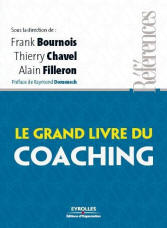
My personal perspective and distinctive approach to coaching led me to incorporate tools from brief therapies into my coaching practice. This approach was presented in a chapter I published in 2008 in Le grand livre du coaching, published by Eyrolles.
It was in this context that I began training in therapeutic hypnosis at the Institut Français d'Hypnose Ericksonienne. During this training, I discovered how highly responsive I was to hypnosis. I realized that practicing hypnosis came quite naturally to me, and that certain aspects of my personality that I had once been inclined to regard as things to be “corrected” in therapy could, in certain circumstances, become resources in my practice of hypnosis.
The hypnotic phenomenon allowed me to develop a deeper perspective on what is unique about a helping relationship, whether in coaching or in therapy.
This discovery also resonated with certain personal experiences from earlier in my life. During painful periods, including a stay in the hospital, I had discovered — without knowing at the time that these experiences could be understood as processes akin to self-hypnosis — that I could transform a relentless pain into a pleasant sensation of warmth, and transform the white, enclosed surroundings of a hospital room into a world filled with life, color, and music.
I also had the feeling that I was in contact with my diseased organs and that, through this inner connection, I could activate their healing. At the time, I had no theoretical framework with which to understand what I was experiencing. It was only later, through my discovery of hypnosis, that some of these experiences took on a new meaning for me.
This personal dimension profoundly shaped the way I came to approach hypnosis. It led me to see the hypnotic experience not simply as a technique, but as a particular way of relating to oneself, to one's sensations, one's inner representations, and one's resources.
I also came to understand the relationship between NLP and hypnosis differently, recognizing in hypnosis some of the intuitions that had originally sparked my interest in NLP nearly twenty years earlier.
I then decided to devote a significant part of my professional activity to helping individuals through hypnotherapy.
This professional evolution is also part of my personal history. I am married and the father of three children. My experience of family life, like the many human experiences that have shaped my journey, naturally informs the way I relate to people in my practice.
My approach to hypnotherapy is also shaped by this personal journey. I explore this dimension more fully in the following article, which grew out of a question I was asked during my university studies in clinical psychology at Paris 8:“What is personal about your approach?”
Read What Is Personal About My Approach to Hypnotherapy
My practice is grounded in a specific therapeutic framework, which I present in greater detail here:
Read How Sessions Work and the Therapeutic Framework of Hypnotherapy
Bibliography
- FERENCZI, S. (2006). Le traumatisme. Paris: Petite bibliothèque Payot. 1st edition (1920–1932)
- TOUATI, J. Y a-t-il une place pour une pratique psychothérapeutique dans le coaching. in T. Chavel, F. Bournois, A. Filleron (Eds.), Le grand livre du coaching, Paris: Eyrolles, Editions d'Organisation, 2008, pp. 397–409
- WINNICOTT, D. W. (1975). Jeu et réalité. L'espace potentiel. Paris: Ed. Gallimard. Collection Folio essais
- YALOM, I. (2008). Thérapie existentielle. Paris: Galaade